
How Can Professional Surfboard Rack Installation Transform Your Beach Home Storage?
Understanding the Critical Importance of Proper Surfboard Storage Solutions
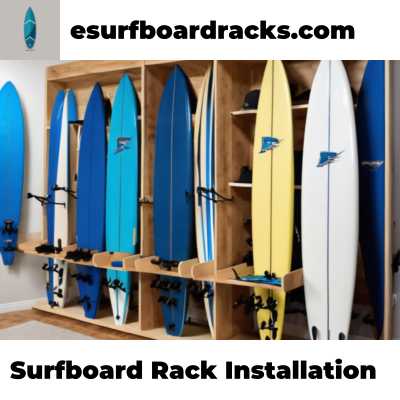
Surfboards represent significant investments for enthusiasts, athletes, and casual beach-goers alike. Whether someone owns a single board or maintains an extensive collection, the way these prized possessions get stored directly impacts their longevity, performance, and the overall aesthetic appeal of living spaces. Many people underestimate how environmental factors—salt air, UV radiation, temperature fluctuations, and humidity—systematically degrade surfboard materials when storage solutions remain inadequate or haphazard.
The distinction between merely "storing" a surfboard and implementing a comprehensive storage strategy cannot be overstated. Professional installation of surfboard racks goes far beyond simply hanging boards on walls. It encompasses understanding weight distribution, material compatibility, moisture management, and accessibility patterns that preserve board integrity while optimizing spatial efficiency. Think about it this way: a surfboard left leaning against a garage wall experiences uneven stress concentration at contact points, potentially warping the rails or causing permanent damage to the foam core structure. This mechanical stress compounds over weeks and months, transforming what seemed like a temporary storage solution into an expensive mistake.
Why Standard Storage Methods Fall Short
Many homeowners attempt DIY storage arrangements using inadequate materials or improper installation techniques. These shortcuts frequently result in compromised board conditions, wasted space, or dangerous situations where boards fall unexpectedly. The risks extend beyond property damage—poorly secured surfboards can create safety hazards for household members, particularly children and pets moving through spaces where boards might shift or collapse.
The Real-World Consequences of Neglected Storage
When surfboards rest improperly, several degradation processes accelerate simultaneously. The fiberglass resin develops stress fractures. Foam cores compress unevenly. Fins experience unnecessary pressure. These cumulative effects dramatically reduce a board's functional lifespan and resale value. What began as a $500-$2000 investment deteriorates into an unusable object within a few seasons—all because the storage approach lacked professional consideration.
Exploring the Different Types of Surfboard Rack Systems Available
The marketplace offers numerous rack configurations, each designed for specific situations, space constraints, and collection sizes. Understanding these options helps property owners make informed decisions aligned with their actual needs rather than settling for whatever seems readily available at hardware stores.
Horizontal Wall-Mounted Rack Systems
Horizontal racks position boards parallel to walls, maximizing vertical space utilization. This configuration works exceptionally well for homes with limited floor space, coastal properties where square footage commands premium prices, and anyone seeking a gallery-like presentation of their board collection.
The advantages of horizontal systems include:
- Space efficiency—utilizing previously wasted wall area above doorways, windows, or in hallway spaces
- Visual organization—allowing at-a-glance inventory assessment of board types and quantities
- Easy access—retrieving specific boards without disturbing adjacent ones
- Aesthetic appeal—transforming functional storage into decorative display elements
Horizontal racks accommodate varying board lengths through adjustable support arms. The weight distribution remains uniform across the board's span, preventing stress concentration at isolated points. Professional installation ensures proper wall anchoring into studs or reinforced backing, supporting weights that range from 8 to 50 pounds depending on board specifications and rack design.
Vertical Freestanding Rack Configurations
Vertical racks provide standalone solutions for spaces where wall mounting proves impractical. These structures function independently without requiring permanent wall modifications, making them ideal for renters or temporary installations. The footprint remains relatively compact while accommodating multiple boards in an upright position.
Key characteristics of vertical systems:
- Portability—moving racks between locations without professional assistance
- Flexibility—no commitment to permanent wall modifications
- Stability—engineered bases that prevent tipping even when fully loaded
- Multiple capacity options—ranging from 2-board compact models to 8-board commercial-scale installations
The engineering behind quality vertical racks focuses on weight distribution across wide bases. Wider stance provides greater stability. Reinforced joints prevent wobbling. Cushioned contact points protect board surfaces from abrasion and pressure marks.
Overhead Garage Storage Solutions
Overhead systems utilize ceiling space, creating storage zones that remain completely out of traffic paths. These installations prove particularly valuable in garages where floor space serves multiple purposes—parking vehicles, workshop areas, storage for other equipment. The overhead approach keeps boards secure yet accessible through pulley systems, hydraulic assists, or simple lift mechanisms.
Implementation details for overhead systems involve:
- Ceiling joist identification and reinforcement assessment
- Load-bearing capacity calculations accounting for combined weight of racks and boards
- Pulley or mechanical system selection based on frequency of access
- Safety mechanisms preventing accidental drops or uncontrolled descents
- Proper spacing to accommodate board removal without interference
Overhead installations demand precise measurement and structural evaluation. Ceiling joists typically support distributed loads effectively, but point loads created by concentrated rack attachments require careful analysis. Professional installers measure actual joist spacing, verify structural integrity, and install fastening systems rated for projected loads with appropriate safety margins.
Horizontal Floor-Standing Racks
Floor racks position boards horizontally across dedicated ground-level structures. These systems work well in basements, storage rooms, or dedicated board storage areas where ceiling height and wall space prove limited. The designs typically feature multiple tiers, enabling efficient use of vertical space within a compact footprint.
Characteristics specific to floor-standing horizontal racks:
- High storage density—multiple boards stacked within a manageable space footprint
- Accessibility—easy removal of boards without disturbing others in different height zones
- No installation requirements—completely free-standing structures requiring no fastening to building elements
- Variety of materials—ranging from wood frames to metal industrial-grade systems
Floor racks require solid, level surfaces to maintain stability and prevent board shifting. Slightly angled installations can be corrected through shim placement or adjustable feet that accommodate floor irregularities. The separation between tiers prevents boards from resting directly against one another, eliminating pressure marks and moisture accumulation zones where boards contact each other.
Recognizing the Specific Installation Challenges in Coastal Environments
Coastal properties face unique environmental pressures that standard storage solutions often fail to address adequately. The combination of salt spray, persistent humidity, temperature variations, and intense UV radiation creates conditions where inadequate storage systems deteriorate rapidly, and board quality suffers dramatically.
The Corrosion Problem in Salt-Rich Atmospheres
Salt air accelerates oxidation and corrosion of metal components in standard racks. Regular hardware store racks feature steel bolts, fasteners, and framework that rust within months when exposed to coastal salt spray. This corrosion compromises structural integrity while staining walls and boards through rust migration.
Professional installations address this challenge through:
- Stainless steel or marine-grade hardware throughout fastening systems
- Protective coatings applied to metal surfaces
- Regular maintenance protocols accounting for salt-air environments
- Material selections proven to withstand coastal atmospheric conditions
Managing Moisture and Humidity in Rack Placement
Coastal humidity levels fluctuate dramatically between day and night cycles, creating condensation on board surfaces and in enclosed storage compartments. Racks positioned in poorly ventilated areas trap moisture, promoting mold growth, delamination of fiberglass layers, and weakening of foam cores.
Proper installation considers:
- Air circulation patterns through storage areas
- Rack positioning that prevents moisture accumulation behind or beneath boards
- Strategic spacing allowing air movement around board surfaces
- Ventilation requirements in enclosed storage zones
UV Degradation in High-Sunlight Locations
Even fiberglass resin formulations designed for durability degrade under intense, prolonged UV exposure. Colors fade. Resin matrices become brittle. Structural integrity diminishes over seasons of uncontrolled sun exposure. Racks positioned near windows, on exposed patios, or in open-air structures require protective measures or relocation strategies.
Mitigation approaches include:
- Installing racks in shaded locations or beneath covered structures
- Using protective covers that block UV while allowing ventilation
- Positioning racks on north-facing walls or interior spaces
- Installing UV-protective films on nearby windows
- Seasonal repositioning to minimize sun exposure during intense months
Evaluating How Professional Installation Surpasses DIY Approaches
The apparent simplicity of mounting a rack to walls or suspending it from ceiling joists masks numerous technical considerations that distinguish professional installations from amateur attempts. These differences ultimately determine whether storage systems protect board investments or gradually contribute to their deterioration.
Structural Assessment and Capacity Verification
Professional installers begin by evaluating existing structural conditions. They identify wall framing, measure joist spacing, verify material composition, and assess load-bearing capacity. This assessment determines whether proposed installations align with actual structural capabilities or require reinforcement measures.
DIY approaches typically skip this critical analysis. Homeowners estimate wall
strength based on appearance rather than actual structural specifications. This guesswork leads to installations where fasteners penetrate drywall without reaching studs, resulting in systems that fail catastrophically under board weight.
Precise Measurement and Level Installation
Professional technicians use laser levels, stud finders, and precision measuring tools to ensure perfectly level installations. Even slight tilts create uneven weight distribution, causing boards to shift gradually over time or rest on edges rather than full support surfaces.
The measurement process involves:
- Identifying optimal locations accounting for accessibility and safety
- Marking fastening points with mathematical precision
- Pre-drilling pilot holes to prevent wood splitting or fastener misalignment
- Ensuring horizontal alignment across multiple support points
- Verifying vertical plumb on standing structures
Material Selection Based on Environmental Conditions
Professional installers select hardware, padding materials, and structural components specifically suited to local environmental conditions. Coastal properties receive corrosion-resistant stainless steel. Humid climates receive materials resistant to moisture absorption and mold. High-sun locations receive UV-protective treatments and materials.
DIY installers often purchase whatever materials appear convenient at local retailers, without considering environmental factors. This approach results in systems that deteriorate prematurely, requiring replacement or repair within a few seasons.
Proper Fastening Techniques and Safety Protocols
Installation requires fastening directly into structural elements using appropriate hardware rated for projected loads. Professional installers calculate combined weight of racks plus maximum board load, then select fasteners with safety factors exceeding minimum requirements. They use expansion anchors in concrete, lag bolts into wood framing, and specialized fasteners for different materials.
Critical fastening considerations include:
- Anchor type matching wall or ceiling material composition
- Fastener diameter and length appropriate for load requirements
- Spacing between fasteners preventing stress concentration
- Washers distributing clamping forces across larger surface areas
- Torque specifications ensuring proper tightness without over-tightening
Vibration and Movement Isolation
Professional installations incorporate isolation techniques preventing boards from vibrating or shifting due to household movement, earthquakes, or wind exposure. Rubber padding under horizontal support points absorbs vibrations. Lateral bracing prevents side-to-side movement. These features protect boards from developing stress fractures or experiencing surface damage through repeated micro-movements.
Understanding the Financial Investment and Long-Term Value Proposition
Professional surfboard rack installation represents a meaningful expenditure, yet this investment yields substantial returns through board preservation, space optimization, and property value enhancement.
Calculating True Cost of Board Damage Through Poor Storage
A typical quality surfboard ranges from $500 to $2000 in initial purchase cost. When improperly stored, these boards experience damage that reduces value by 50-80% within 2-3 years. A $1500 board, deteriorated through inadequate storage, might sell for $300-$500 if salvageable, or require disposal at zero recovery value if damage proves severe.
Consider the cumulative effect across multiple boards. Someone with 6-8 boards in their collection faces potential losses of $3000-$8000 through improper storage practices. Professional installation costs typically range from $300-$1200 depending on system complexity and structural modifications required. The financial comparison demonstrates that proper installation costs represent a tiny fraction of board replacement value.
Space Efficiency and Property Value Enhancement
Effective storage systems reclaim usable space in garages, bedrooms, and living areas. This space reclamation translates into tangible property value improvements. Real estate professionals recognize that organized, efficient storage systems enhance property marketability and perceived value.
Coastal properties particularly benefit from quality storage solutions. Potential buyers viewing homes recognize that professional rack installations indicate thoughtful property management and attention to detail. Installed systems become selling features that justify premium asking prices or accelerate sales timelines.
Maintenance Cost Avoidance
Boards stored improperly require more frequent maintenance—pressure washing to remove mold, fiberglass repair of stress fractures, fin replacement due to damage, resin sealing of moisture intrusion points. These repair costs accumulate rapidly.
Professional storage systems essentially eliminate these maintenance needs by preventing damage before it occurs. The preventive approach proves far more economical than reactive repairs.
Identifying the Essential Features of Quality Rack Systems
Not all surfboard racks provide equivalent protection or functionality. Understanding distinguishing features helps property owners evaluate systems objectively rather than defaulting to lowest-cost options.
Cushioning Material Quality and Durability
Contact points between boards and racks require appropriate cushioning preventing surface abrasion, pressure marks, or damage. Quality systems use closed-cell foam padding, specialized plastic guards, or rubber components engineered for long-term durability.
Essential padding characteristics include:
- Resistance to UV degradation preventing material breakdown
- Moisture resistance preventing mold and material deterioration
- Sufficient thickness distributing contact pressure across larger areas
- Durability maintaining protective qualities for years without compression or hardening
- Non-reactive composition preventing chemical interaction with board resin or paint
Inadequate padding materials compress over time, losing protective qualities. Moisture-absorbing materials develop mold or mildew. Low-quality foam hardens and becomes abrasive, creating the very damage it intended to prevent.
Weight Distribution Engineering
Sophisticated racks distribute loads evenly across multiple contact points, preventing stress concentration zones. The engineering accounts for board weight distribution, which isn't uniform—boards typically weigh slightly more toward the tail section. Support points position strategically to counterbalance this natural weight distribution.
Advanced systems feature:
- Multiple support points preventing cantilevered loading
- Adjustable supports accommodating boards of varying dimensions
- Load distribution spreading weight across maximum possible surface area
- Reinforced joinery preventing flex or twisting under weight
- Stability features preventing tipping or lateral movement
Adjustability for Different Board Types
Quality systems accommodate the full range of board variations—shortboards, funboards, fish, cruisers, retro boards, and longboards. Each type features different dimensions, thickness, and weight distribution. Rigid systems designed for single board types prove inadequate for diverse collections.
Adjustable features supporting multiple board types include:
- Sliding support arms accommodating boards of varying lengths
- Adjustable vertical spacing for different board thicknesses
- Removable inserts customizing support point positions
- Modular designs allowing configuration changes as collections evolve
- Optional accessories expanding system capabilities
Aesthetic Integration with Residential Design
Storage solutions occupying prominent spaces influence overall interior design perception. Quality systems feature clean lines, professional finishes, and design elements complementing residential architecture rather than appearing as utilitarian afterthoughts.
Material and finish options providing aesthetic diversity include:
- Wood construction in various stains matching furniture and cabinetry
- Powder-coated metal finishes in colors coordinating with décor
- Minimalist designs emphasizing form and function balance
- Display-oriented configurations presenting boards as decorative elements
- Customization options matching specific design preferences
Navigating the Selection Process for Appropriate Rack Systems
Choosing among available options requires systematic evaluation accounting for specific circumstances, spatial constraints, and collection characteristics. A methodical selection process ensures chosen systems provide optimal functionality and protection.
Assessing Available Space and Accessibility Requirements
The first step involves honest evaluation of available space. Measure dimensions of intended installation locations. Consider ceiling heights, wall availability, floor space, and traffic patterns. Determine how frequently boards get accessed—daily, weekly, seasonally—as this significantly influences optimal rack positioning and configuration.
Accessibility assessment should address:
- Physical reach of household members—some may struggle accessing high-mounted boards
- Frequency of board use patterns influencing desired access convenience
- Guest or family member involvement with board selection and use
- Storage area lighting and visibility affecting ease of board identification
- Pathways and clearances needed for board removal without obstruction
Evaluating Board Collection Size and Types
The number of boards and their types dramatically influence appropriate systems. A single-board casual surfer needs fundamentally different solutions than someone maintaining 10+ boards of varying types. Collection composition matters too—all shortboards stack differently than mixed collections with multiple longboards.
Collection evaluation components include:
- Current board inventory and typical storage patterns
- Projected collection growth over next 3-5 years
- Board types present—shortboards, longboards, fish, funboards, specialty designs
- Board dimensions ranging from shortest to longest in collection
- Board thickness variations from thin performance boards to thick foam boards
Considering Environmental and Climate Factors
Coastal properties, inland homes, humid climates, arid regions, and areas experiencing seasonal variations each present different environmental challenges. Selection should account for these specific conditions rather than applying generic solutions.
Environmental factor evaluation includes:
- Salt spray exposure and corrosion risks
- Humidity levels and moisture management needs
- UV intensity and sun exposure patterns
- Temperature fluctuations an